Advanced Safety Training and Control Course
Our most comprehensive safety training course, designed for those who want to experience and understand all the 'exciting' stuff and the reactions of their paraglider.
The exercises performed in the course are a simulation of the different situations that we can find in 'normal' flight, whether due to turbulence or to pilot error and control.
The course is NOT about aerobatics. However, while learning to control the glider we will use some techniques from acrobatics.
This course is the basis for any pilots who wants to start learning acro.
Many of the acrobatic manoeuvres result from controlling and piloting normal glider behaviour caused by turbulence. Acrobatic manoeuvres can be caused by an incident in flight, making it essential to learn to recognise and control all events.
The focus of the course is on control.
That is, we do not just cause an incident and wait for the outcome, or react badly and make things worse; the goal is to learn to react to regain control of the situation.
During the course, we will practice and control all in-flight incidents arising from collapses or piloting errors, learn advanced piloting techniques and also learn to use rapid descent manoeuvres.
The order of the manoeuvers is designed so that we move in a logical progression from one to another increasing knowledge and control by what we have already pracriced.
Objectives:
- Understand and practice the mechanics of flight.
- Improve the level of piloting.
- Recognise incidents in flight and control the glider in turbulent conditions.
- Learn fast descent manoeuvres.
- Make the correct decisions in the event of an incident in flight.
What we do:
The first day will begin with a briefing explaining what we will do and how we do it and go over the programme for the course.
Each manoeuvre is explained before running it and corrected both during and after each flight. We all discuss together, just after landing and later with the video what has happened during the day and analyse the results of each pilots flights.
In the briefings, we discuss the theoretical manoevres as well as analyse video footage of the flights.
As an option, outwith the course we offer, to practice and experience the manoevres on a tandem with one of our instructors. This can reinforce the learning experience for many pilots
Advanced Safety Training tasks:
The basic program for the course is below, however the course is tailored to each individual pilot.
If the instructors feel that a pilot is not experienced enough or not yet ready to make a manoevre the syllabus will be adapted to suit that pilot and extra time given to practice of manoevres which will help them to advance.
It is much more instructive to increase learning and improve control of more basic manoevres than to cause a pilot to enter a manoevre that it outwith their ability and results in them losing control.
Basic manoevres:
- Big ears
- Control of the amplitude of manoevres using the brakes, understanding pendulum forces, speed and energy
- Asymmetric collapse, trim speed
- Symmetric deflation, trim speed
- Frontal collapse, trim speed
- Pitch Control
- B-line stall
Level 2:
- Asymmetric collapse, accelerated
- Symmetric deflation, accelerated
- Frontal collapse, accelerated
- Spiral
- Spiral with big-ears
- Auto-rotation
- Spin
- Wing over and turn-reversal
- Search for stall
- Full stall
- Rapid descent methods
- Reserve deployment (optional)
Important
This list of tasks is indicative but open to change. Each pilot has a different level of experience and progresses at a different rate.
Whether on the recommendation of the instructor or by personal choice, the pilot can decide not to practice some manoevres.
The basis of the course is control, it is not intended to create conditions of chaos, because as well as being dangerous this is counter-productive to progress.
Course Duration:
The course has a duration of 8 flights, usually taken over 4-5 days depending on the number of pilots and weather conditions. If the weather causes delay we will extend the course for as long as necessary.
Requirements:
This course is open to qualified pilots able to launch and land safely.
The ideal time for many pilots to complete the course is after a minimum of 50 flights though 100+ flights are recommended.
To get the most from the course it is adviseable that pilots are already have some experience in thermal flight since this is where there is the greatest possibility of incidents occurring.
What is included in the course:
- Minimum 8 flights with instruction, feedback and analysis
- Waterproof radio bag
- Life jacket
- Commentary and analysis of flights including video footage
- Course video
- Theory and practical classes
You will need:
- Glider
- Harness
- Reserve parachute
- Helmet
- 2m Radio
- Medical repatriation insurance (bring a photocopy)
Cost: 680€ per pilot
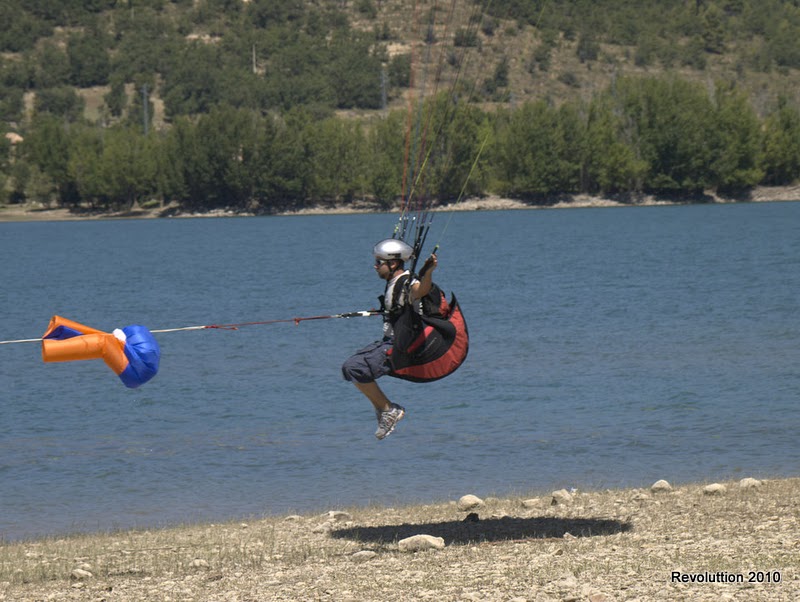
Photo:Antonio Viñuela
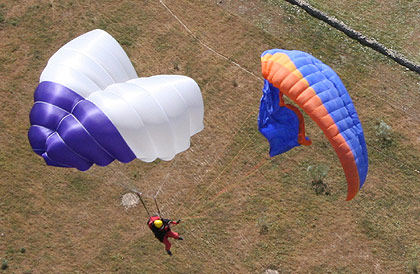
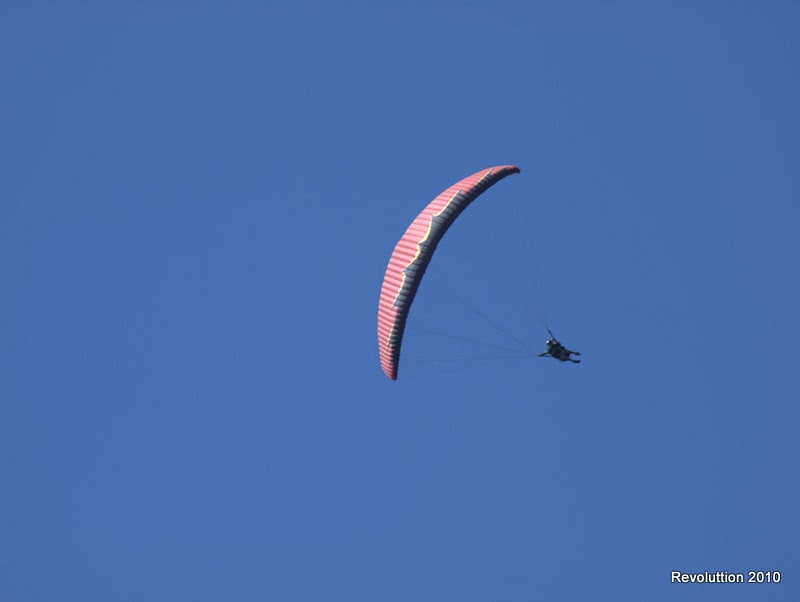
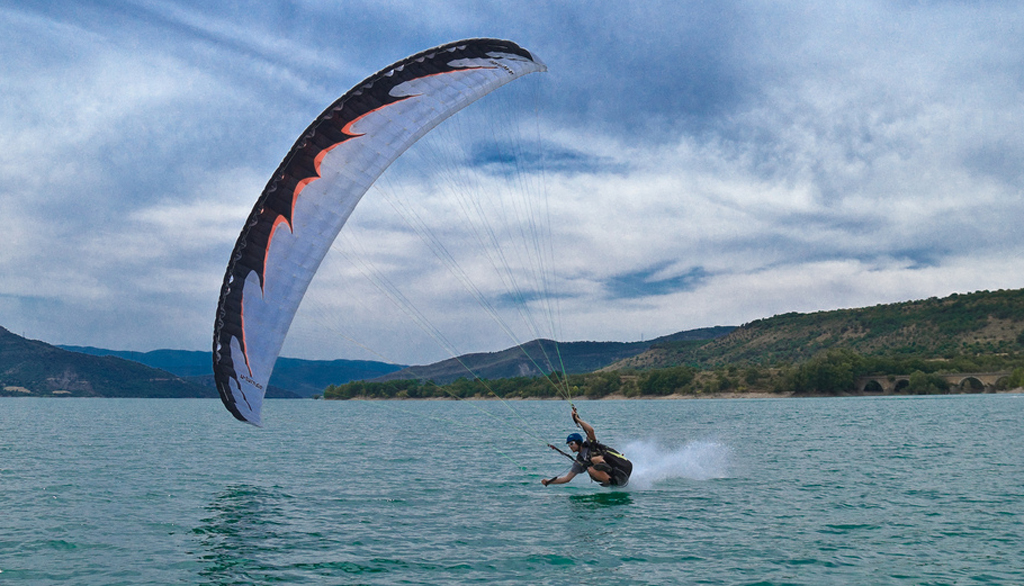
Photo:Barbara Paroli
Photo:Antonio Viñuela
Photo:Antonio Viñuela
Photo:Antonio Viñuela